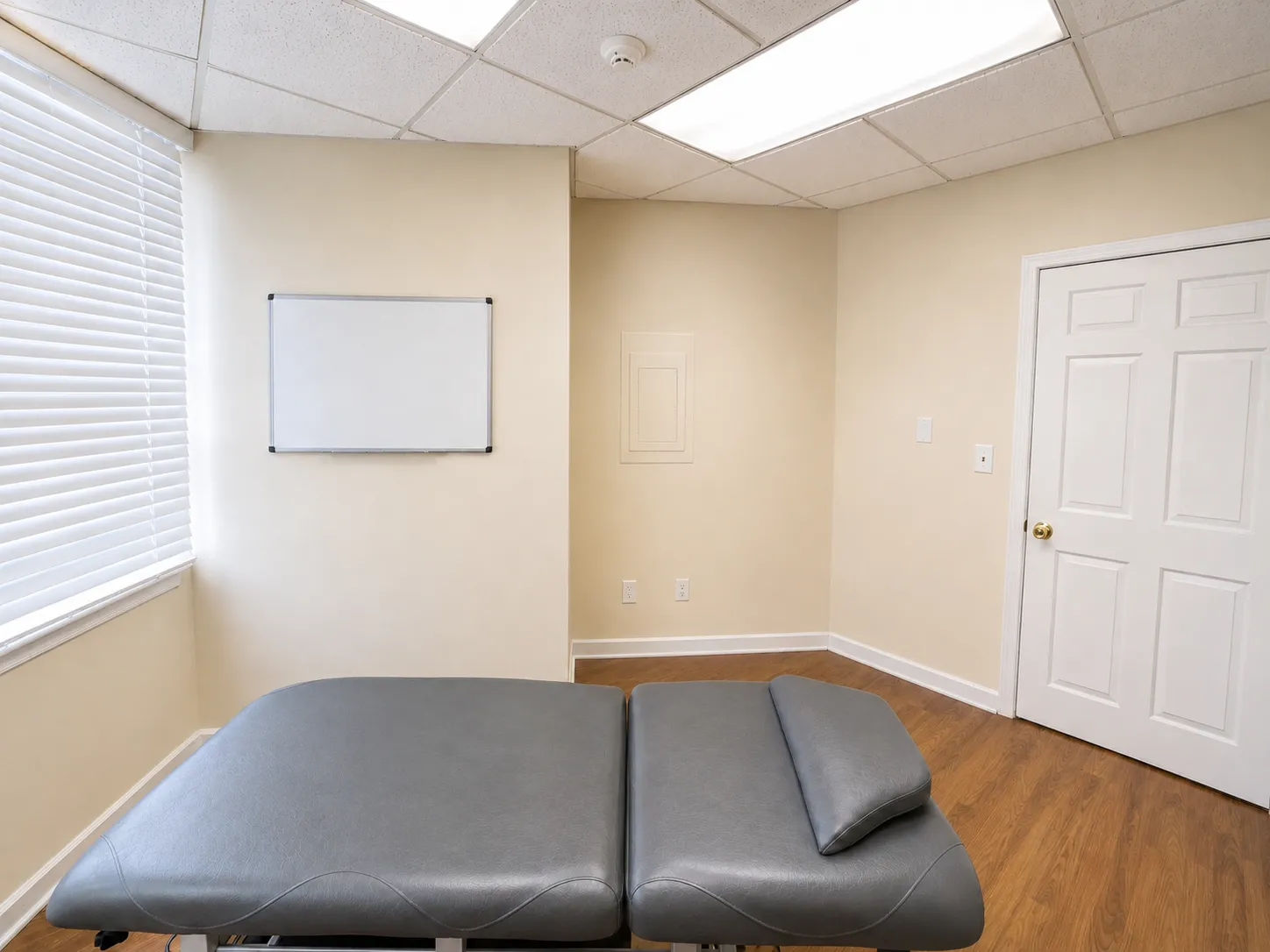
Complex PT Evaluation in Allendale, NJ.

Still in Pain, Still Unsure, or Still Looking for the Right Next Step?

A focused one-on-one evaluation for persistent or unresolved symptoms when you need more clarity before continuing treatment or pursuing more medical intervention.

Your evaluation is built around careful listening, movement testing, treatment or modification when appropriate, and retesting based on how your body responds.

This is not simply another PT visit.

It is a focused evaluation designed to help clarify what makes sense next.

Start with clarity before committing to more care.

The goal is to help you get to the right place, not keep you in PT unnecessarily.
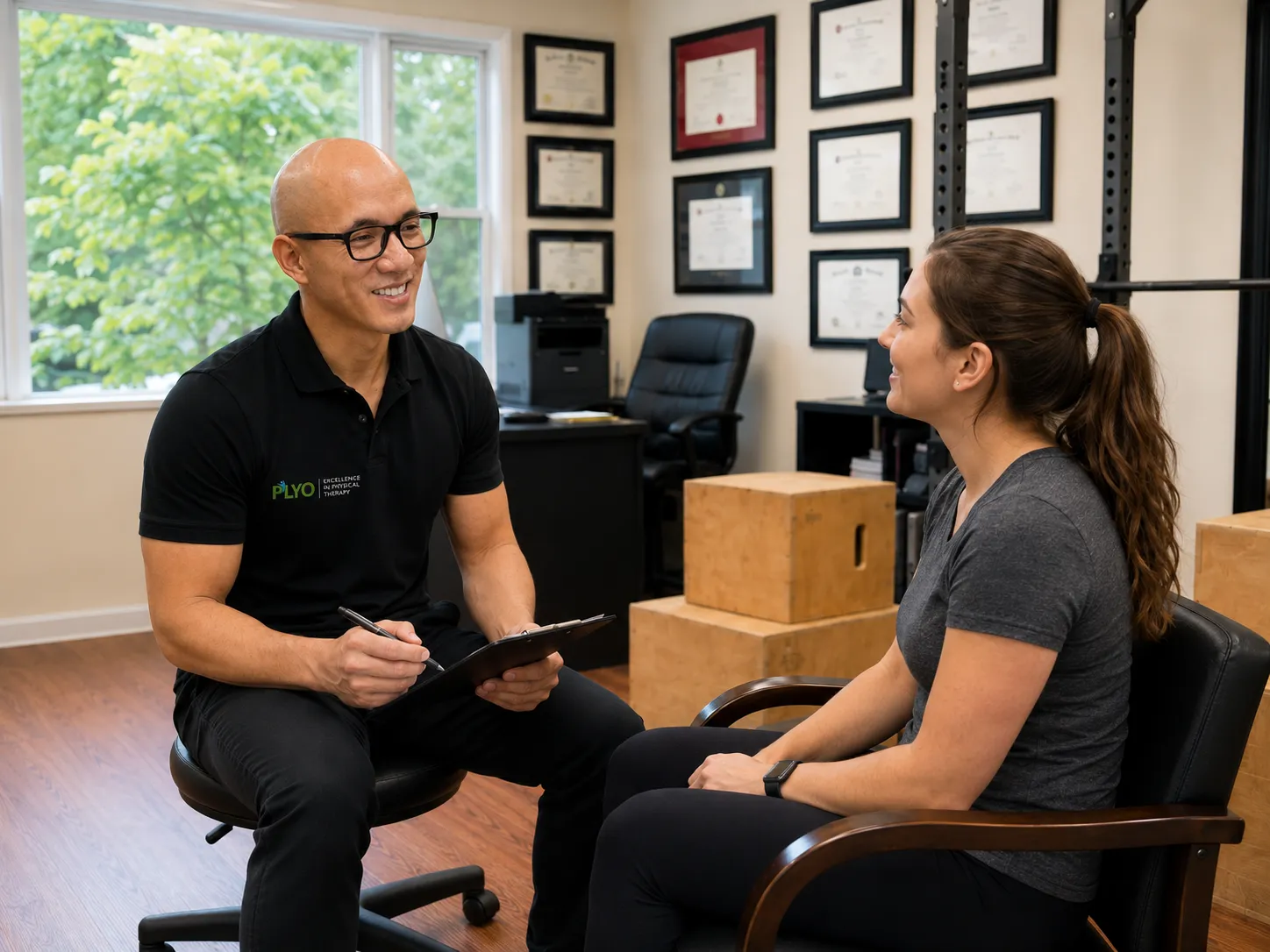
Listen

Test

Retest

Decide

Clear evaluation. Honest guidance. Right next step.

Not sure where to start?

Start General PT

For new injuries, post-op recovery, sports concerns, Medicare-covered care, balance, mobility, or first-time PT.

Request Complex PT Evaluation

For persistent symptoms, unclear answers, symptoms not better, returning, or prior care that has not fully resolved the issue.

Help Me Choose

If you are unsure which path fits, PLYO can help guide the starting point.

This may be a strong fit if…

  • Symptoms have persisted or kept returning
  • PT helped temporarily, but did not fully last
  • Imaging, injections, medication, chiropractic, acupuncture, or other care have not led to a clear plan
  • You are unsure whether you need more PT, imaging. injections, surgery, or a different plan
  • You want a conservative option before more medical intervention

A different starting point may fit better if….

  • Symptoms began very recently and are steadily improving
  • You are looking for straightforward post-op rehab
  • You already have a clear plan and are making steady progress
  • General PT may be the better starting point

Tried care before but still looking for direction?

If prior care helped only temporarily, imaging did not lead to a clear plan, or you are unsure what to do next, the purpose of this evaluation is to help clarify the most appropriate path.

What Makes This Evaluation Different?

This is a response-based, decision-oriented evaluation — not a generic exercise list, preset protocol, or automatic long plan of care

1

Listen Carefully

Understand your history. concerns, and goals.

2

Test Movement and Symptoms

Identify patterns and potential drivers.

3

Treat or Modify When Appropriate

Use targeted techniques or modifications as
indicated.

4

Retest Response

Check how your body responds to guide
next steps.

5

Decide the Next Step

Discuss the most appropriate path forward together.

Complex Case Clarity + Validation Package

For persistent or unresolved symptoms, this pathway helps clarify whether your next step should be self-management, focused PT, referral, medical follow-up, or another appropriate path.

What You Get

Focused history

Movement testing

Response-based trial

Retesting

Clear next-step discussion

The goal is to help you get to the right place, not keep you in PT unnecessarily.

What You May Leave With

We bring together your history, prior treatment, imaging when relevant, physical exam findings, and how your symptoms respond to specific movements or treatment. This helps us develop a clearer working hypothesis and determine whether physical therapy appears to be the right next step. In some cases, we identify factors or possible sources of symptoms that were not previously recognized or fully explored—including whether a problem that seems to be coming from the hip, knee, shoulder, or another area may actually be influenced by the spine. Other times, medical follow-up or referral may be more appropriate. Our goal is to give you greater clarity about what may be going on and what to do next.

Sometimes symptoms can be aggravated—or progress can be slowed—by certain positions, activities, how you move or how much you are doing, footwear, work setup, or other day-to-day factors. We help you figure out which of these actually matter in your case, what may be worth changing, and just as importantly, what you do not need to avoid. The goal is to make your plan more specific—not to give you a long list of restrictions.

Temporary relief can still provide useful information. We look at what helped, what did not last, what changed, and how your symptoms respond during testing. That helps us decide whether a different strategy, more focused care, self-management, or another pathway may be appropriate.

Advanced Credentials Applied to Better Patient Decisions

OCS

FAAOMPT

Dip. MDT

Cert. MDT

CSCS

Advanced credentials matter when they lead to better listening, better testing, better retesting. and better next-step decisions.

Insurance & Payment Snapshot

Medicare in-network for eligible physical therapy services; out-of-network with most commercial insurance plans; clear cash-pay options may be available depending on the service pathway.

Before care begins, payment and insurance details should be discussed clearly so you are not surprised later.

FAQ: Common Questions.

General PT is a good fit for many common orthopedic and post-operative problems. Complex PT is designed for problems that persist, keep coming back, are hard to explain, or have not improved as expected.

We spend more time sorting through what may actually be driving your symptoms rather than assuming the painful area is the source. For example, hip, knee, or shoulder symptoms can sometimes be influenced by the spine—even when your neck or back is not your main complaint—so we specifically check for that.

Complex cases may also require a more precise plan between visits. We make sure you understand what to do, how often to do it, what changes to watch for, and when something should be continued, modified, or stopped. What you do between visits becomes part of the evaluation and helps us decide the next step—whether to continue, progress, change direction, transition toward self-management, or consider medical referral.

Imaging can be very helpful, but a scan does not always tell the whole story. Some findings that are described as abnormal on imaging are also common in people who have no pain, especially as we age. Seeing words like degeneration, bulging, or arthritis on a report can sound alarming, but those changes do not automatically mean they are the cause of your symptoms. We look at your imaging alongside your history, physical exam, movement testing, and symptom response to better understand which findings may actually matter in your case and what the next step should be.

Evidence: Brinjikji et al., AJNR, 2015; American College of Radiology Appropriateness Criteria: Low Back Pain.

Temporary relief can still give us useful information. We look at what helped, what changed, and why the improvement may not have lasted. We also see how your symptoms respond when we try different movements or treatment approaches. That helps us decide whether to adjust the plan, focus treatment more specifically, help you manage more independently, or consider a different next step.

If PT does not appear to be the right next step, we will discuss that honestly. The goal is to help you get to the right place, not keep you in PT unnecessarily. When appropriate, we may recommend medical follow-up, further evaluation, another provider, or a different care pathway.

Many patients can contact us directly to get started. Whether a referral is needed may depend on your insurance or Medicare requirements and your specific situation. If one is required, we will let you know and help you with the next step.

No. We do not decide in advance how many visits you need. Some people respond quickly and may only need a short course of care. Others improve more gradually and may need more time as we adjust the plan based on how they are responding.

If PT does not appear to be the right path, we want to recognize that as soon as the pattern becomes clear and help guide you toward the appropriate next provider or medical pathway. The goal is not to keep you in treatment longer than necessary—it is to give you the care that is appropriate for you and help you move forward with clarity.

In Complex PT, what happens between visits can be just as important as what happens during the visit. We will make sure you understand what to do, how often to do it, what changes to watch for, and when something should be continued, modified, or stopped.

Your role in the process matters. When we prescribe a specific movement, frequency, or change in activity, there is a reason for it. Following the plan consistently gives us the best information about how your problem is responding. If the plan is not followed, it becomes harder to know whether the current approach is working or truly needs to be adjusted.

Complex PT is not a passive process or a quick fix. We will guide you and adjust the plan when needed, but your participation between visits is an important part of making good decisions about what comes next.

Ready for a Clearer Next Step?

You do not have to know the answer before reaching out. The purpose of the evaluation is to help clarify the most appropriate next step.